
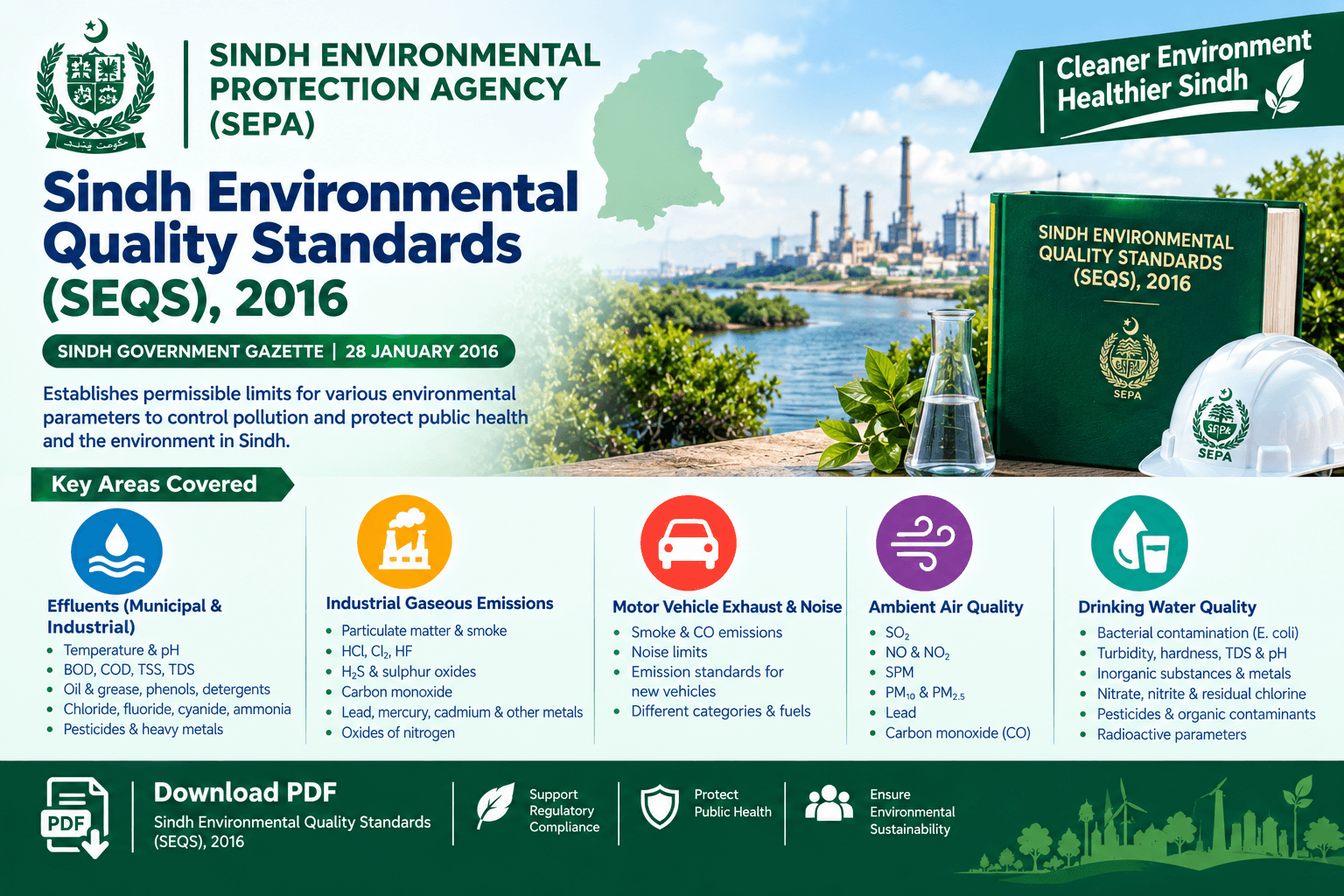
The Sindh Environmental Quality Standards (SEQS), 2016 were notified by the Sindh Environmental Protection Agency (SEPA) with the approval of the Sindh Environmental Protection Council. The standards were published in the Sindh Government Gazette on 28 January 2016.
The SEQS establish permissible limits for different environmental parameters to help control pollution and protect public health and the environment in Sindh.
Key Standards Covered
1. Municipal and Liquid Industrial Effluents
The standards specify permissible limits for wastewater discharged into inland waters, sewage treatment systems and the sea. Parameters include:
- Temperature and pH
- Biochemical Oxygen Demand (BOD)
- Chemical Oxygen Demand (COD)
- Total Suspended Solids (TSS) and Total Dissolved Solids (TDS)
- Oil and grease
- Phenolic compounds and detergents
- Chloride, fluoride, cyanide and ammonia
- Pesticides and toxic metals, including lead, mercury, chromium and cadmium
2. Industrial Gaseous Emissions
The standards cover industrial air emissions, including:
- Smoke and particulate matter
- Hydrogen chloride, chlorine and hydrogen fluoride
- Hydrogen sulphide and sulphur oxides
- Carbon monoxide
- Lead, mercury, cadmium and other metals
- Oxides of nitrogen
3. Motor Vehicle Exhaust and Noise
The document specifies emission and noise limits for in-use vehicles and emission standards for new vehicles. It covers smoke, carbon monoxide and vehicle noise, as well as emission requirements for different vehicle categories and fuel types.
4. Ambient Air Quality
The standards specify limits for ambient air pollutants, including:
- Sulphur dioxide (SO₂)
- Oxides of nitrogen (NO and NO₂)
- Suspended particulate matter (SPM)
- Particulate matter (PM₁₀ and PM₂.₅)
- Lead
- Carbon monoxide (CO)
5. Drinking Water Quality
The document includes drinking-water quality parameters covering:
- Bacterial contamination, including E. coli
- Turbidity, hardness, total dissolved solids and pH
- Inorganic substances and toxic metals
- Nitrate, nitrite and residual chlorine
- Pesticides, phenolic compounds and other organic contaminants
- Radioactive parameters
Important Notes on Compliance
The document includes specific explanations and conditions for applying certain standards, including wastewater dilution, pollutant concentrations and emission measurement requirements. Compliance should be assessed against the applicable parameter, limit, measurement method and conditions stated in the document.